 English
- English
-
 Español
 -
 Português
 -
 русский
 -
 Français
 -
 日本語
日本語 -
 Deutsch
 -
 tiếng Việt
 -
 Italiano
 -
 Nederlands
 -
 ภาษาไทย
 -
 Polski
 -
 한국어
한국어 -
 Svenska
 -
 magyar
 -
 Malay
Malay -
 বাংলা ভাষার
 -
 Dansk
Dansk -
 Suomi
Suomi -
 हिन्दी
 -
 Pilipino
 -
 Türkçe
 -
 Gaeilge
 -
 العربية
 -
 Indonesia
 -
 Norsk
Norsk -
 تمل
تمل -
 český
český -
 ελληνικά
 -
 український
 -
 Javanese
 -
 فارسی
فارسی -
 தமிழ்
தமிழ் -
 తెలుగు
 -
 नेपाली
 -
 Burmese
 -
 български
 -
 ລາວ
ລາວ -
 Latine
 -
 Қазақша
 -
 Euskal
 -
 Azərbaycan
 -
 Slovenský jazyk
 -
 Македонски
 -
 Lietuvos
 -
 Eesti Keel
 -
 Română
 -
 Slovenski
 -
 मराठी
मराठी -
 Srpski језик


Why Is Nail Dust More Dangerous Than You Think, And How Does A Dust Eliminator Help?
Baiyue has been closely observing changes in nail care environments, where the use of a Nail Dust Eliminator is becoming an important topic as nail dust exposure gains more attention in daily salon and home manicure routines. Nail dust is often underestimated because it appears harmless and disappears quickly in the air, yet its composition and persistence raise concerns that are increasingly discussed in beauty and hygiene circles. Understanding what happens during nail filing and polishing helps explain why this invisible by-product deserves more attention than it usually receives.
What Nail Dust Really Is and Where It Comes From
Nail dust is generated during the shaping, grinding, and removal of acrylic, gel, or natural nail surfaces. While it may look like simple powder, it is actually a mixture of keratin particles, polymer fragments, pigments, and sometimes trace chemicals from nail enhancement materials.
In enclosed spaces, these fine particles do not simply settle. They remain suspended in the air for extended periods, especially when ventilation is limited. This is one of the main reasons why modern nail environments increasingly consider air control systems such as a Nail Dust Eliminator to manage airborne particles more effectively.
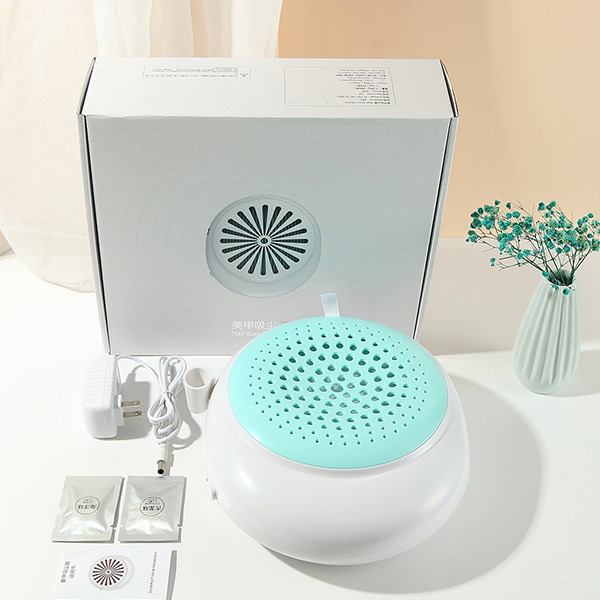
Why Nail Dust Is More Concerning Than It Looks
Respiratory System Exposure
Fine nail dust particles are small enough to be inhaled deeply into the respiratory tract. Over time, repeated exposure in poorly ventilated spaces may lead to discomfort such as throat irritation, coughing, or nasal sensitivity. While occasional exposure is common, the concern lies in long-term accumulation in enclosed environments.
Chemical Residue Interaction
Nail dust is not purely organic. Depending on the materials used in nail styling, dust may contain polymers, adhesives, and pigments. These substances, when airborne, can mix with skin oils or moisture in the respiratory system, potentially increasing sensitivity for some individuals.
Indoor Air Quality Decline
In a closed room, airborne nail particles can settle on surfaces, tools, and fabrics. This not only affects cleanliness but also contributes to a lingering odor when combined with nail products. Over time, this can subtly change the comfort level of a workspace.
Common Misconceptions About Nail Dust
There are several misunderstandings that often reduce awareness of nail dust risks:
- "It disappears quickly, so it is harmless." In reality, the smallest particles remain airborne longer than visible dust.
- "Only professionals are affected." Home users performing frequent nail work can also experience repeated exposure.
- "Masks alone are enough protection." Masks reduce inhalation but do not control airborne accumulation in the environment.
These misconceptions highlight why airflow management tools, including a Nail Dust Eliminator, are increasingly being integrated into nail environments.
How a Nail Dust Eliminator Works in Practical Settings
It is designed to capture airborne particles at the source—usually the point where filing or polishing occurs. Instead of allowing dust to disperse into the surrounding air, it draws particles downward or inward through controlled airflow.
Airflow and Filtration Mechanism
Most systems rely on a fan-driven suction structure combined with a replaceable or washable filter. When nail dust is generated, it is immediately pulled into the filtration layer, reducing airborne spread. This process helps maintain a cleaner working surface and improves overall air clarity.
Noise and Comfort Considerations
Modern designs focus on reducing operational noise. A quieter environment allows for easier communication and a more comfortable experience during long nail sessions. This is particularly relevant in shared spaces where multiple users are present.
Comparison of Nail Dust Control Approaches
| Method | Dust Control Efficiency | Air Quality Impact | Maintenance Needs | User Comfort |
| Open environment (no device) | Low | Dust remains airborne | Minimal | Moderate to low |
| Basic fan ventilation | Medium | Partial reduction | Medium | Medium |
| Nail Dust Eliminator system | High | Significant improvement | Filter cleaning required | High |
This comparison shows why structured airflow capture systems are increasingly discussed in nail care environments where cleanliness and comfort are priorities.
Broader Health and Environmental Considerations
Beyond immediate cleanliness, nail dust control also relates to long-term environmental comfort. Accumulated fine particles can affect lighting clarity, surface hygiene, and even the perception of space cleanliness. In shared environments, this becomes more noticeable over time.
A well-managed airflow system helps reduce:
- Dust buildup on tools and tables
- Lingering odors from nail materials
- Secondary inhalation from settled particles
- Frequent cleaning workload
These improvements are not only about comfort but also about maintaining a stable working atmosphere.
Development Insights from Industry Practice
Shenzhen Baiyue technology co.,limited, which has been engaged in nail lamp and related equipment development since earlier production stages, has observed a consistent trend: users increasingly prefer integrated solutions that combine convenience, airflow control, and ease of maintenance.
In this context, devices like a Nail Dust Eliminator are evolving beyond simple suction tools. Design considerations now often include:
- Multi-speed airflow adjustment
- Washable filtration systems
- Dual-port usability for additional functions
- Low-noise structural engineering
- Ergonomic hand positioning support
These features reflect a shift toward more user-centered environmental control in nail care setups.
Practical Ways to Reduce Nail Dust Exposure
While devices play a key role, environmental habits also matter:
- Keeping workspaces slightly ventilated
- Cleaning filters regularly rather than delaying maintenance
- Avoiding excessive filing pressure to reduce dust volume
- Wiping surfaces immediately after procedures
- Positioning airflow capture devices close to the working area
When combined, these practices help maintain a more stable air environment.
Conclusion: A Shift Toward Cleaner Nail Care Environments
Nail dust is no longer viewed as a minor by-product of nail styling but as a factor that influences comfort, cleanliness, and long-term workspace quality. Awareness of airborne particle behavior has led to more structured approaches in air management, where tools play a practical role in reducing dispersion at the source.
Shenzhen Baiyue technology co.,limited continues to focus on evolving nail care equipment, including solutions such as the Wholesale Nail Dust Eliminator for clean nail ash, lightning, charging, polish, reflecting ongoing attention to usability, airflow control, and everyday working conditions in modern nail environments.
Send Inquiry





X
We use cookies to offer you a better browsing experience, analyze site traffic and personalize content. By using this site, you agree to our use of cookies.
Privacy Policy